Insights from YouAppi + Kochava 2026 CTV Growth Guide
TL;DR Summary
Kochava multi-touch and CTV attribution data shows that CTV precedes search 96% of the time and social 94% of the time in the same app install journey—making it a true origin point of user intent, not the assist. Yet US brands allocate just 7.4% of ad budgets to a channel that commands 17.9% of media attention. The YouAppi + Kochava 2026 CTV Growth Guide documents the incremental lift CTV drives across verticals including QSR, streaming, and finance. It uncovers three common attribution configuration errors (short lookback windows, missing cross-screen settings, incomplete postbacks) that cause CTV’s contribution to disappear from the data. For performance marketers running CTV alongside mobile, this is the strategic measurement and campaign playbook the channel has needed.
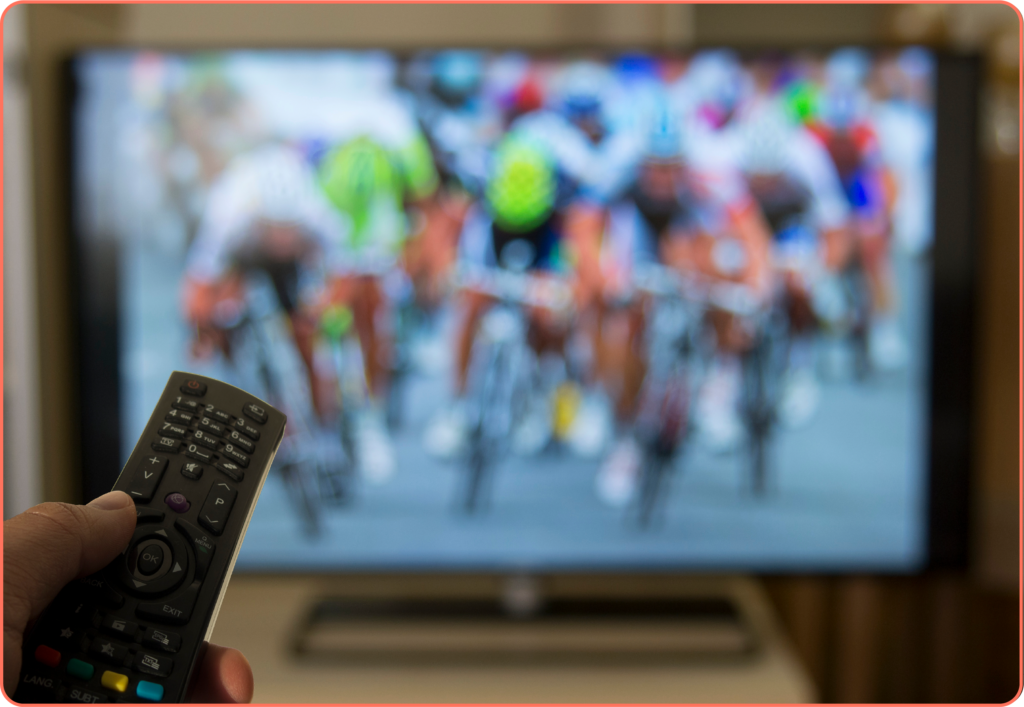 In professional road cycling, the sprint finish is one of the most tactically complex minutes in sport. A team builds and holds a leadout train—a chain of riders who sacrifice their own race to protect the sprinter, driving the pace higher and higher until each one hits their limit, swings off, and peels into the wind. The last rider standing is the sprinter, launched into the final 200 meters at full speed on the energy everyone else burns to get them there. The team does the work that makes the win possible—and the sprinter takes the podium.
CTV advertising has been running leadout for years. It sets the pace, builds the intent, places the brand in the living room at the moment of maximum attention. Then, when the user taps a social ad, picks up their phone and searches, or navigates the app store, credit flows to the last touch to cross the line. Search and social take the stage win. CTV swings off into the wind.
YouAppi’s 2026 CTV Growth Guide: From Reach to Results, produced in partnership with Kochava and Jampp, is a tactical manual for teams who believe that it’s time to recognize the leadout riders.
A Gap That Survives on Bad Measurement
The CTV opportunity scale has been documented thoroughly enough—as evidenced in YouAppi’s report—that any budget mismatch can no longer be explained by uncertainty about the channel. US adults now spend 17.9% of their media time with CTV, while brands allocate just 7.4% of budgets there. Global CTV ad spend hit $48 billion in 2025, programmatic access has made the big screen measurable and performance-ready, and by 2027 more than 121 million US households will be CTV households. The audience is effectively universal, and the inventory has scaled. The capability argument is settled.
The budget gap isn’t a channel problem anymore—but a measurement one. If your attribution stack can’t see what CTV does before other channels get the last touch, you’ll keep underfunding the leadout channel that’s actually setting up your results.
What CTV Attribution Data Shows: 96% of the Time, CTV Goes First
The key point in the guide comes from Kochava’s CTV attribution data, and it reframes the entire CTV conversation for performance marketers.
When an app install includes both a CTV and search touchpoint, CTV comes first 96% of the time. When CTV and social are both present in the user journey, CTV precedes social exposure 94% of the time. These aren’t anomalies from a narrow sample, but patterns drawn from tens of millions of install journeys across the Kochava global measurement infrastructure.
This means that the channels routinely collecting last-touch credit arrive after CTV has done its job. The leadout rider swings off, and the data starts recording only when the sprinter launches. This is the measurement problem in a nutshell.
“CTV shouldn’t be measured in a silo. The cross-screen, multi-channel synergies of this potent big-screen medium can only be truly understood and optimized with integrated and holistic measurement.”
Jason Hicks
GM, Measurement Solutions, Kochava
What Lift Data Actually Shows
When teams do measure CTV’s contribution holistically, the performance case becomes difficult to argue against. Across the installs tracked in Kochava’s dataset, users served CTV alongside other media channels outperformed their mobile-only counterparts post-install across every vertical the guide examined. QSR shows the most striking result: 14% more food and drink purchases among CTV-exposed users. Streaming audiences watched 9% more videos. All verticals exhibited marked lift.
User quality follows the same pattern: CTV-exposed audiences show higher retention rates, stronger engagement, and greater lifetime value compared to users reached through mobile-only campaigns.
Between Q2 2024 and Q2 2025, CTV-attributed conversions grew 10% across Kochava’s global dataset. Mobile remains the dominant channel by volume, but today, CTV is the fastest-growing source of attributed conversions—a rate of change that signals how rapidly its measurable impact is scaling across verticals and geographies.
There’s also a frequency dynamic worth understanding: The Kochava data shows a clear relationship between CTV exposure frequency and post-install conversion. As users receive additional CTV touchpoints, their likelihood of completing a post-install action such as purchase, first deposit, or subscription rises meaningfully. The household primes across exposures. But the mobile conversion that follows looks to a last-touch system like it just magically materialized.
Three Configuration Errors That Make CTV Invisible
The guide identifies three measurement failures that cause CTV’s contribution to disappear from the attribution record. These are not obscure edge cases, but rather the default state for teams that stand up CTV measurement without adjusting the configuration for how CTV actually behaves.

- Attribution windows calibrated for mobile: Default 24-hour view-through windows are too narrow for CTV campaigns, where intent builds over days. The guide recommends extending lookback windows to 3–7 days to accurately reflect how CTV impressions drive downstream actions that don’t happen immediately.
- Missing cross-screen attribution settings: Without IP-based matching activated, the connection between living room impression and mobile install never gets made. Conversions influenced by CTV don’t get attributed correctly; they default to whatever channel the user touches last on mobile.
- Incomplete postback configuration: If data connections from CTV apps, mobile apps, and websites aren’t all feeding the attribution system, measurement has inherent structural blind spots. The guide recommends ensuring that postbacks are established across every eligible device conversion touchpoint, so nothing in the conversion journey goes unrecorded.
Address these items, and CTV’s contribution stops disappearing. The leadout rider shows up in the timing data.
The Full Playbook
The YouAppi CTV 2026 Growth Guide goes deeper on several fronts: creative strategy for the lean-back environment of the big screen, campaign orchestration for CTV-to-mobile sequences, the emerging opportunity in LATAM and APAC markets, and the AI infrastructure now running nearly 90% of CTV ad spend programmatically. For performance marketers ready to close the gap between where CTV attention lives and CTV budgets go, it’s the operational manual the channel has needed, covering setup, measurement configuration, creative principles, and attribution logic in one place. Download the guide here.
Comprehensive measurement solutions from Kochava provide the attribution infrastructure to put the guide’s insights into practice. Learn more about our CTV measurement. If you want to talk through what this looks like for your brand’s specific stack, we’re available for a consultation.
The leadout rider has been doing the work all along. It’s time the data reflects it.
CTV Growth FAQ
Does CTV advertising drive app installs?
Yes. Kochava multi-touch attribution data from tens of millions of install journeys shows that when CTV and search both appear in the same conversion path, CTV comes first 96% of the time. When CTV and social are both present, CTV precedes social 94% of the time. This makes CTV the primary driver of user intent, not a supporting channel.
Why is CTV underrepresented in performance marketing budgets?
The budget gap—US brands allocate 7.4% of ad spend to a channel commanding 17.9% of media time—is a measurement problem, not a capability one. Default attribution configurations, including 24-hour view-through windows and missing IP-based cross-screen matching, systematically prevent CTV’s contribution from appearing in the data.
How should I configure attribution to measure CTV correctly?
Three settings matter most: Extend lookback windows to 3–7 days to capture delayed intent, activate IP-based matching to connect living room impressions to mobile installs, and ensure that postbacks are established across CTV apps, mobile apps, and websites so no conversion touchpoint goes unrecorded. The YouAppi + Kochava CTV 2026 Growth Guide covers full configuration guidance.