TL;DR Summary
App installs don’t happen organically or spontaneously—each install occurs for a specific reason or trigger that prompts user action. Marketing mix modeling (MMM) tools such as AIM (Always-On Incremental Measurement) use decomposition to break down total installs into contributing components including word of mouth, seasonal influences, app store placement and ratings, and network effects. This process transforms raw install numbers into actionable insights by identifying what’s working best, spotting weak areas, and enabling strategy optimization. By understanding the various factors influencing installs rather than accepting them as “organic,” marketers can better steer product growth and make informed strategic decisions.
Understanding the decomposition of installs with MMM
In the vast garden of app marketing, we often hear terms like “organic installs” that make it sound like app installs grow spontaneously from the digital earth. Let’s debunk this myth right away: You don’t just plant an app in your digital garden, sprinkle it with a few updates, and let Mother Nature take the reins. Each install occurs for a specific reason, a trigger that prompts a user to take action. With a robust marketing mix modeling (MMM) tool like AIM (Always-On Incremental Measurement), we go beyond the surface, delving deep to uncover the true reasons behind every install. Here, we explore the intricacies of the decomposition of user acquisition (UA) marketing and shed light on the real drivers of user engagement.
Understanding the Decomposition of Installs
What Is Decomposition?
Decomposition is a method to break down your total installs and other key performance indicators (KPIs) into different elements or factors to understand the various sources and influences leading to these outcomes.
How Do We Do It?
1. Data Collection: First, we gather all data points related to your KPIs. This could be user ratings, seasonal data, word-of-mouth referrals, and more.
2. Breaking It Down: We then split these numbers into their contributing components:
- Word of Mouth/User Influence: Analyze how past user activities and recommendations contribute to current installs.
- Seasonal Influences: Identify patterns over specific periods, like a surge during holidays or specific times of the year.
- App Store Influence: Assess how your product’s placement and ratings in app stores are affecting installs.
- Other Network Effects: Consider other influences, such as promotions, partnerships, or advertising.
3. Visualization: To make this information clear and insightful, we present it visually. A pie chart might show the proportion of each factor, while a stacked bar chart could depict how these elements change over time.
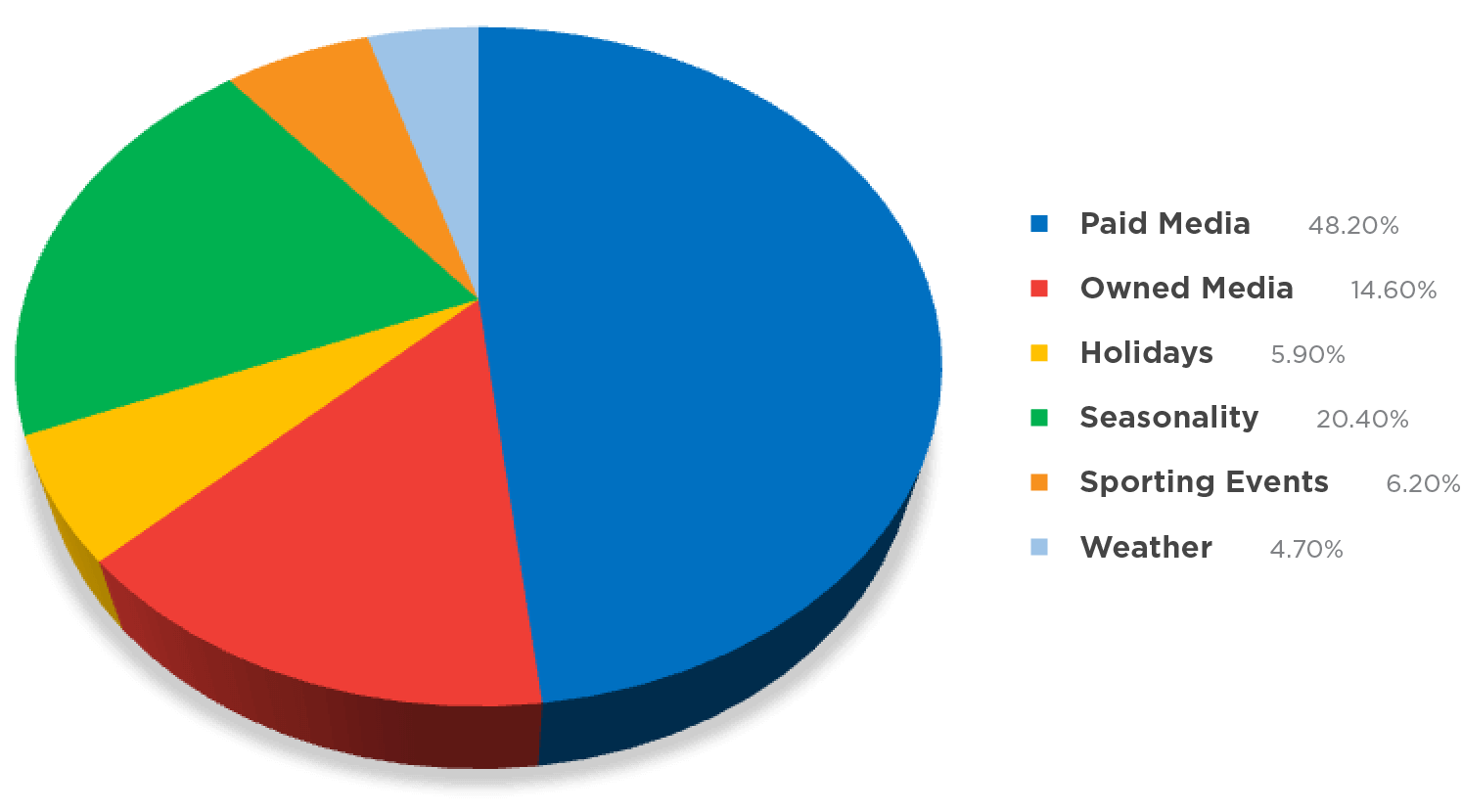
Why Categorize?
By breaking down your numbers into categories, you gain deeper insights:
- Identify Strong Points: Recognize what’s working best. Is it word of mouth? Seasonal promotions?
- Spot Weak Areas: Find out where you could improve. Perhaps your app store rating needs a boost?
- Optimize Strategies: With clear insights, you can tailor your strategies better. If you know word of mouth is strong, maybe a referral program can amplify that strength.
Conclusion
Decomposition helps transform raw install numbers into actionable insights. By understanding the various factors influencing your KPIs, you can better steer your product’s growth and strategy. Think of it as peeling the layers of an onion; each layer reveals more about the health and potential of your product.
Do you have a lot of “organic” installs in your UA data? Connect with us to understand how we can help you peel back the layers and decomp key components contributing to your growth.
What does decomposition mean in the context of app install analysis?
Decomposition is a method to break down total installs and other key performance indicators (KPIs) into different elements or factors to understand the various sources and influences leading to these outcomes. The process involves collecting all relevant data points (user ratings, seasonal data, word-of-mouth referrals), splitting numbers into contributing components including user influence, seasonal patterns, app store effects, and other network influences, then visualizing the information to make it clear and insightful.
Why should marketers categorize and decompose their install data?
Categorizing install data through decomposition provides deeper insights that enable marketers to identify strong points (recognizing what’s working best, such as word of mouth or seasonal promotions), spot weak areas (finding where improvements are needed, like app store ratings), and optimize strategies accordingly. With clear insights, marketers can tailor strategies better—for example, amplifying strong word of mouth through referral programs or addressing weak app store ratings.
What are the main components that decomposition analyzes for app installs?
Decomposition analyzes several key components including word of mouth and user influence (how past user activities and recommendations contribute to current installs), seasonal influences (patterns during holidays or specific times of year), app store influence (how product placement and ratings affect installs), and other network effects such as promotions, partnerships, and advertising. Each component is quantified to show its proportional contribution to total installs.
Why is the concept that there’s “no such thing as an organic install” important?
The concept challenges the misconception that app installs grow spontaneously without specific drivers. Each install occurs for a specific reason—a trigger that prompts user action. By using robust MMM tools such as AIM to decompose what appear to be “organic” installs, marketers can uncover the true reasons behind every install, whether word of mouth, seasonal factors, app store optimization, or other influences, enabling more strategic and informed growth decisions.