From the first pumpkin to the last pine needle, new helpers join both sides of the sale, and every confirmation carries more than it can tell
TL;DR Summary
Holiday 2026 gift purchases end in two words, Order confirmed, and every dashboard wants credit. The decision starts weeks earlier, in AI shopping chats, store aisles, and gift guides no tracker sees. With agentic commerce pulling checkout behind walled gardens and prices inflating totals, marketing mix modeling, backed by incrementality testing and last-touch attribution, is built to read the whole story.
In the Peanuts strip for October 23, 1959, Charlie Brown goes to the store for a Halloween mask and finds them sold out. When Patty asks whether the store plans to order more, he exclaims, “They were busy putting up Christmas decorations!”
Charlie Brown arrives late to an age-old complaint. As early as December 1883, the Washington Evening Star observed that “the holiday season of trade seems to begin earlier every year,” one of many such grumbles historians have gathered from decades of old newspapers. By 1993, the two holidays are so tangled that they get their own mashup fairy tale: Tim Burton’s The Nightmare Before Christmas, in which Jack Skellington, Pumpkin King of Halloween Town, stumbles into Christmas Town and decides to run the holiday himself.
Christmas in the Halloween Aisle
 Sixty-seven years after Charlie Brown’s empty mask shelf, nobody has to choose. The Home Depot stocked stores with holiday decor the week of October 5, and Amazon’s Prime Big Deal Days on October 6–7 set Halloween costumes from $5 beside holiday decorations at up to 35% off, to “kick off the fall and holiday seasons”—a pairing it now makes every October. Across the two days, Adobe counted about $9.9 billion in US online spending at all retailers, up 8.5% from the previous year.
Halloween and holiday campaigns now occupy the same October weeks, often for the same brand, and a merchandising decision is also a media decision. When a shopper checks out with both costume and gift in one cart, the dashboard has to decide which campaign, channel, or season earns the sale.
A Record Halloween, Planned in September
The National Retail Federation expects Halloween 2026 spending to reach $13.5 billion, surpassing 2025’s record $13.1 billion (the figure that opens last fall’s Halloween Marketing Magic Show). Nearly half of consumers (49%) plan to start shopping in September or earlier, and 47% will use AI tools, often to “brainstorm costumes and decorating themes.”
Somewhere between the rubber masks and wreaths, a holiday gift list starts writing itself. For weeks, the shopper mulls over what to buy a discerning auntie, batting ideas around with friends in the coffee shop, family across the dinner table and, more and more, an AI chat window. All the while, the season sings at full volume, from holiday spots between football plays to an endless parade of influencer gift guides. Little of this deliberation leaves a trail a marketer’s dashboard can follow.
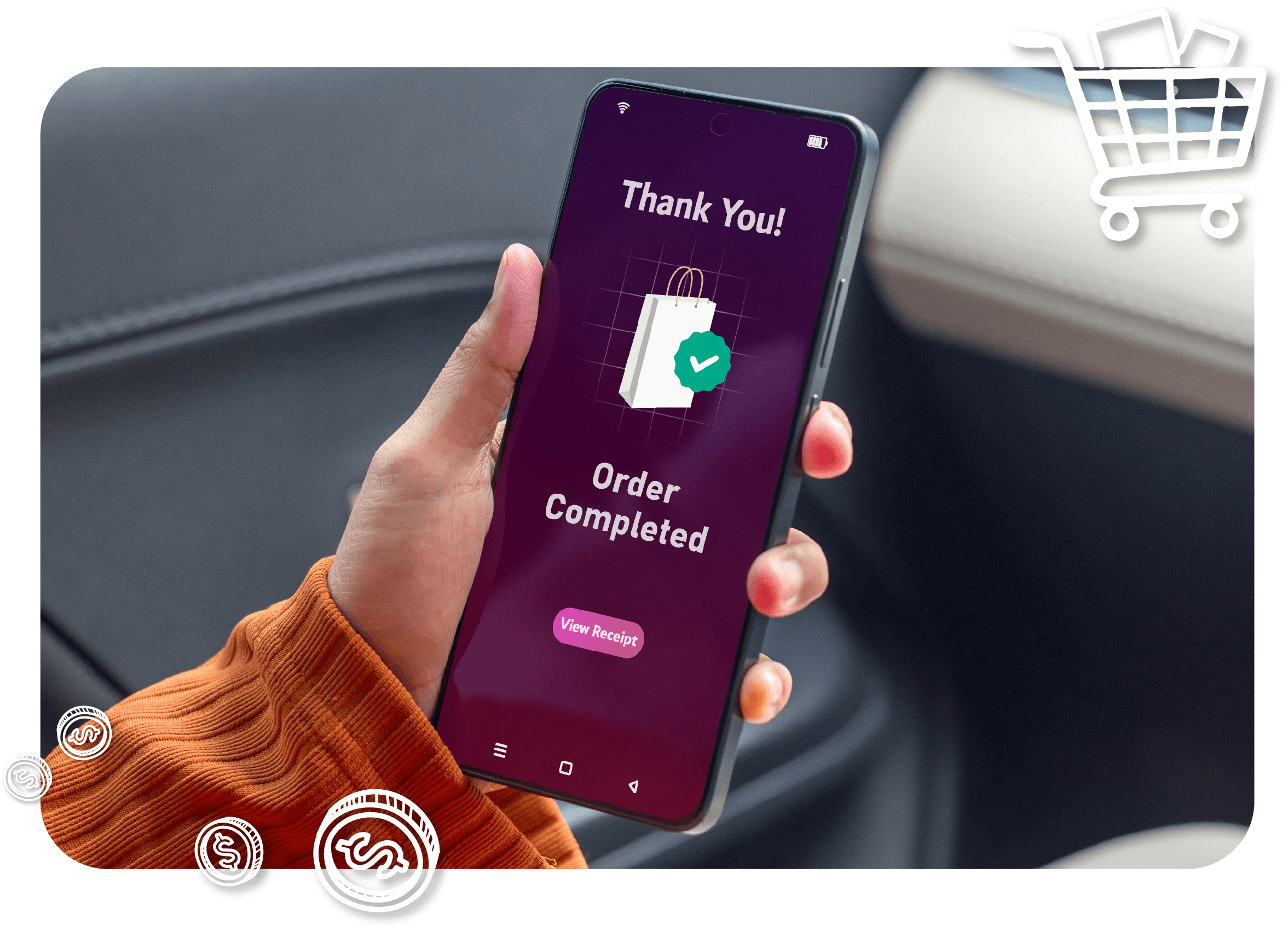
The part that does takes just a few seconds, when every gift on the list ends its long story in the same two words: Order confirmed.
What the Confirmation Knows
The confirmation may arrive as an app push, an email receipt, a digital wallet notification, or a pickup alert. Increasingly, it follows a chat with an AI assistant that helps settle on just the right gift. Whatever its form, it records the item, price, time, and merchant exactly.
By the time the weekly reports arrive, it’s the most popular document in marketing, and every system wants its name on the gift tag. The retailer records a sale, while the platform closing checkout logs a conversion. The retail media network serving the sponsored product ad claims attributed revenue, the branded search that comes just before takes its share, and last-touch attribution hands all the credit to the final click, as it is built to do. Each record accurately describes the ending from wherever its system happens to stand. Meanwhile, the connected TV (CTV) spot during Thursday Night Football and the creator’s gift-guide video may never appear on the dashboards at all.
On the eve of Holiday 2026, the confirmation has never been more precise, and the decision behind it, brewing since before Halloween, has rarely been harder to read.
 What the Ledger Can’t Tell
In O. Henry’s 1905 classic “The Gift of the Magi,” Della has $1.87 and a husband she adores. She sells her knee-length hair to buy Jim a platinum chain for his watch. Jim sells the watch to buy Della a set of tortoiseshell combs for her hair.
A shopkeeper’s ledger would record both purchases to the penny and explain neither. Everything that makes the story so beloved every December happens beforehand, in two quiet sales no one else sees.
Out, In & Up Widen the Gap
This season, three forces widen the distance between human decision and digital confirmation:
Out: The shortlist forms out in the world, in AI conversations, social feeds, creator videos, CTV, and store aisles, where influence leaves only fragments of a trail.
In: The purchase closes in, behind the walls of platforms and retail media networks that run their own checkout and record their own endings in fine detail.
Up: Prices push the recorded total up, so a bigger number can arrive without anyone buying more.
New helpers sit on both sides of the sale. Shoppers lean on AI assistants to research and compare, now and then to complete the purchase. Marketers are beginning to hand their own agents the work of building ad sets and adjusting bids. Deloitte’s holiday survey finds that 39% of shoppers consider generative AI their go-to for at least one holiday shopping task, yet just 16% would trust it to place the order. The machines have arrived to help with the shopping, and people still do the choosing.
Out: The Decision Escapes the Path
In March, OpenAI stepped back from hosting checkout inside ChatGPT, handing the final sale back to merchants, to focus on helping shoppers find products. (Our September explainer, Your Team Drafted Itself, unpacks this shift and sorts out the protocol layers underneath.)
For measurement, the assistants may matter most before checkout, where they help shape a shortlist for a purchase that often happens somewhere else.
Where Holiday Gift Decisions Get Made
In PwC’s survey, 29% of consumers expect AI to play some part in this year’s holiday shopping, against 22% a year ago. Among shoppers using AI for gift ideas, 64% switch tabs and finish the job on a website.
When PwC asks consumers where they’ll make up their minds about gifts, 52% name the store, followed by search at 42%, social at 29% and AI-powered tools at 14%. Only 4% expect to complete purchases through an AI tool. Influence that starts in an AI conversation and ends in a store aisle or a browser tab arrives at the confirmation without a return address.
PwC expects shoppers to spend an average of $708 on gifts, with overall gift spending only 2% below last year’s while travel spending per shopper falls 24%. The gift list, it seems, stays largely intact, and the savings come out of the trip. A family guarding its gift budget has every reason to shop around.
What AI-Driven Holiday Traffic Leaves Behind
Adobe expects AI traffic to US retail sites this November and December to climb 130% over last year’s season, and it counts a visit only when a shopper clicks through. Everything before this, the back-and-forth and the brands weighed and set aside, happens off the ledger.
In: The Checkout Moves Behind the Wall
Google’s holiday update says its Universal Commerce Protocol now lets shoppers check out directly with “hundreds of thousands” of brands. On October 15, it brought Universal Cart to US shoppers in Search and the Gemini app. The single cart can hold gifts from many stores and lets shoppers settle with Google Pay without leaving Google.
Amazon put its helper where the cart already lives. Alexa for Shopping answers questions in Amazon’s own search, automates deal-finding and cart-building, and, through Auto-Buy, can purchase an item on its own once it drops to a shopper’s price.
When the same platform hosts the brainstorm and checkout, the loop snaps shut, and the platform’s own reports record the sale.
Four Dashboards, One Scarf
Retail media runs on the same logic. Each network sells ads on its own digital shelf, sees the sales that follow, and reports them with great confidence that travels poorly from one network to the next.
In its August report on retail media measurement, the Association of National Advertisers (ANA) finds that 55% of advertisers cite inconsistent standards as their greatest challenge. When the merchant, an ad platform, and two retail media networks all see the same shopper buy the same gift, each reports a conversion. And yet there’s only one scarf in the box.
Holiday Shopping Still Runs Through the Store
Bain & Company’s 2026 holiday forecast expects nonstore sales to climb 9% and account for about 60% of the season’s growth, while brick and mortar still carries 70% of holiday sales.
The closed loops hold most of the growth while the store still holds most of the sales, and the claims pile up where the two meet. An online ad that sends someone to the store, or a shopper who considers a gift in the store and buys it later on a phone, might show up in the reports as two unrelated events.

When the merchant, an ad platform, and two retail media networks all see the same shopper buy the same gift, each reports a conversion. And yet there’s only one scarf in the box.
Up: Inflation Pads the Totals
Inflation needs no new technology; it arrives the old-fashioned way, on the price tag. Every major forecast this fall calls for growth, each measured its own way. Deloitte expects holiday retail sales from November through January to rise at least 4%, to about $1.7 trillion. Adobe expects US online spending from November 1 to December 31 to reach about $275 billion, up 6.7%. On October 15, the National Retail Federation forecast November and December retail sales up 4.2%, to $1 trillion.
Bain & Company also expects US holiday retail sales to pass $1 trillion for the first time on 4.5% growth, then traces more than half the gain to higher prices.
Inflation is the tinsel of holiday marketing, making everything sparkle a little more than it should. The dashboard reports in dollars and can’t tell which ones arrive as inflation, so nominal lift can look just like marketing lift.
When the Agent Is Handed a Number
Our back-to-school piece, Bought Anyway, notes that the brand side is delegating, too, and an agent chases whatever number it is handed. This season it does so with the tireless obedience and zero skepticism of a workshop elf. Hand it the attributed confirmation as its target, and the plan it builds can drift toward the closed loops that claim credit most aggressively, counting the same scarf once for every dashboard that reports it and reading each price increase as growth. To an elf filling the sleigh, a sale that was coming anyway is confirmed just as precisely as one the campaign earned.
The industry is already building the pipes to automate media buying from proposal to purchase. An agent trained to collect confirmations can deliver plenty of them whether or not the season actually grows.
Reading a Long Story: MMM, Incrementality, and Attribution
 Marketing mix modeling (MMM) is the strategic spine for a season like this one. It estimates what each channel contributes from aggregate sales data, so it can read the stretches of the journey that leave no clicks.
An AI conversation or a browse through the store leaves no identifier, but its effect shows up in the sales pattern across weeks, regions, and products. A well-built model can pick up the shifts without following any one person. Think of the model as the one holiday party guest who notices everything in the room.
Because MMM weighs price and promotions alongside media, it can separate inflation from marketing lift. Its calendar should match the season too. With Adobe expecting $95.8 billion in US online spending in October alone, a model that waits until November 1 to start counting has already missed a great deal. The holiday calendar opens while the Halloween decorations are still up.
Incrementality Testing: Who Really Earns the Scarf?
When retailer, platform, and retail media network all claim the same purchase, incrementality testing checks the claims against what would have happened anyway. By holding back spend in comparable markets or audiences and comparing results, it estimates what would have sold without the ad. It’s the validation instrument, saved for the claims worth checking, and this season a well-placed holdout can keep a brand from paying twice for the same scarf.
Last-Touch Attribution Keeps the Daily Read
If MMM provides the big picture and incrementality settles the disputes, last-touch attribution (LTA) handles the day-to-day. It reads the confirmations that arrive with a visible trail, and many still do.
When a paid search ad sends a ready-to-buy shopper straight to a landing page, LTA gives teams the quick read they need to shift budget and retire tired creative midflight. That’s its lane, and in a season this fast, it’s a busy one.
Build the Measurement Plan Before Cyber Week
Cyber Week runs November 26–30 (Thanksgiving to Cyber Monday), and PwC finds about 40% of planned gift spend lands over these five days.
Halloween, on Saturday, October 31, offers the first read on how this season’s AI-assisted shopping shows up in your own numbers.
Before the peak arrives:
- Calibrate for real lift: Compare 2026 results against 2025 after accounting for price changes and promotion depth, so marketing gets credit only for what marketing moves.
- Set the holdout before Thanksgiving: A test designed in December reads a season that has already happened. Choose the markets or channels to hold back now, while there’s still time for the results to change a plan.
- Decide what number your agents chase: An agent working on the media plan takes its target on trust. Hand it a figure your incrementality tests can stand behind.
- Book your Q1 2027 readout now: Put it on the calendar before the Thanksgiving rush, and note the two questions it will answer: which holiday spending earns new customers and whether they come back.
When the Wrapping Comes Off
 When the gift is opened on Christmas morning, over the eight nights of Hanukkah, or at a family gathering, its long story ends in a living room far from any tracking tag.
The discerning auntie holds the scarf up to the window and beams—the moment the whole retail season aims to create. The digital confirmation, meanwhile, sits weeks deep in somebody’s inbox. Auntie’s delight produces no data at all.
For the marketer, two questions remain that the confirmation can’t answer:
Did any of the season’s advertising actually cause the sale, or would the scarf have been bought anyway?
Will the customer come back to the brand in the spring or vanish before the ribbon is swept off the floor?
Christmas Yet to Come: Q1 2027 Readout
Charles Dickens sends Scrooge three spirits, and the last, the Ghost of Christmas Yet to Come, shows him how things turn out while there’s still time to change them. The marketer’s version arrives between January and March, and it pays to book the visit now.
The first question goes to the marketing mix model, run through January so it can see which holiday spending actually moved sales once the noise settles.
The second goes to a holdout inside the new holiday cohort, which tests whether post-holiday outreach brings customers back or simply greets the ones who are coming anyway.
How Many Holiday Customers Come Back?
The retention drop-off can be steep. Intuit Mailchimp followed the new customers its merchants worldwide won during the 2025 peak season and found that 16.6% came back to buy again between January and March 2026.
For these merchants, that means five of every six holiday newcomers didn’t return in the quarter, and those who did came back in a median of 26 days. Both are useful numbers to have in hand before your own readout. The confirmation shows a sale was won; the months that follow show whether a customer was.
And Then, Easter
The season never waits for the answer. In the Peanuts strip for November 30, 1962, Lucy announces that she’s heading downtown to see the Christmas decorations, only for Charlie Brown to tell her she’s already too late: “They’re starting to put things up for Easter!” Three years after his empty mask shelf, the calendar leaps forward before anyone even gets out the door.
The record skips ahead faster still. A gift that begins in a shared October aisle ends, as far as any record goes, with two words on a screen: Order confirmed.
Reading Past the Confirmation
Measuring Holiday 2026 means tracing back through weeks of mulling and conversation, across closed loops that all claim the same scarf, and on into the quiet months, when a holiday shopper either becomes a customer or slips away.
Reading the full story takes an independent view. Kochava brings marketing mix modeling, incrementality testing, and last-touch attribution together in one framework, so you can separate genuine marketing lift from seasonal noise, starting with the holdouts you set before Thanksgiving and ending with the readout long after the wrapping paper is gone.
Contact our team to plan your season’s measurement.