App marketers are facing more competition for users, with worldwide app releases across Google Play and Apple’s App Store increasing 60% year over year in Q1 2026.
As more apps enter the market, getting an app built is only part of the challenge. Apps still have to get discovered, earn a place on the phone, and give users a reason to come back.
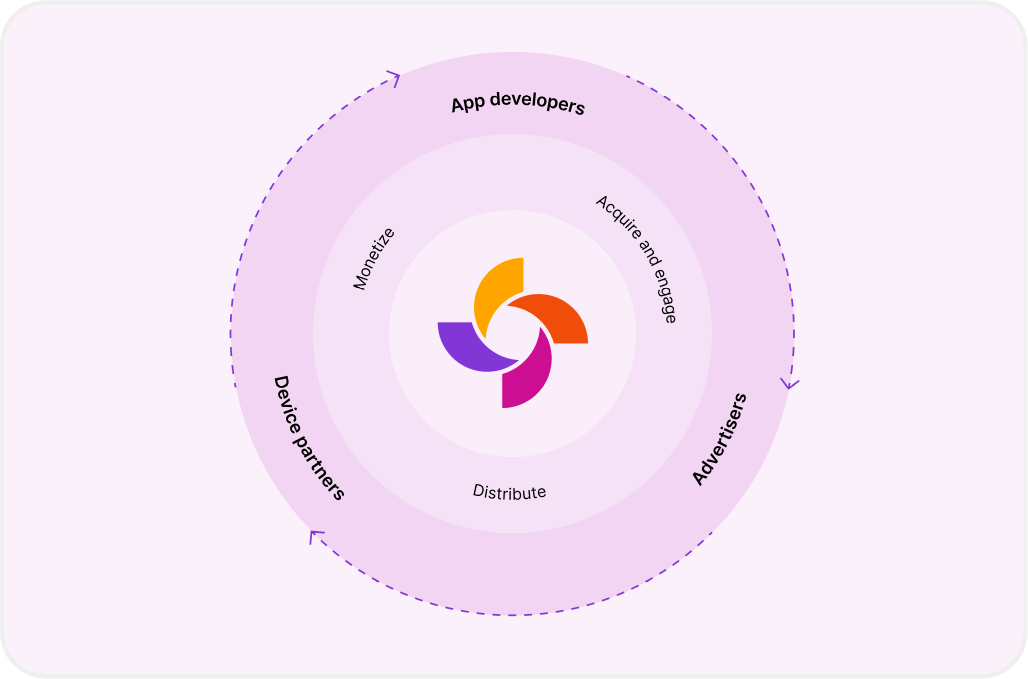
DT operates across those moments. Our technology is integrated directly into devices and tens of thousands of apps, giving marketers more ways to reach users across acquisition and reengagement.
DT by the Numbers
- 1B+ devices integrated with DT Ignite
- 82K+ apps across DT’s global SDK footprint
- 3B+ unique users reached across DT’s global network of devices and apps
- 10+ years of expertise, built on a decade of deep infrastructure partnerships, including leading mobile OEMs and carriers such as Verizon, Motorola, Telefónica, and Orange
Together, these integrations give app marketers access to consumers both directly on device and across a broad in-app footprint.
Create More Paths to Install
Most app marketers rely on a familiar mix of app store discovery and established acquisition channels to drive installs. But as more apps compete for users, growth doesn’t have to depend on just a small set of acquisition paths.
DT gives marketers multiple ways to get their apps in front of users and shorten the path between discovery and install. Through direct integrations with OEMs and carriers, apps can be recommended and installed through native device experiences—from recommendations and installs during initial setup to new discovery moments throughout the life of the device. Across paid media, DT can drive app discovery and installs throughout its extensive network of apps. And DT’s SingleTap can turn a developer’s owned web, social, and cross-promotional channels into direct paths to install.
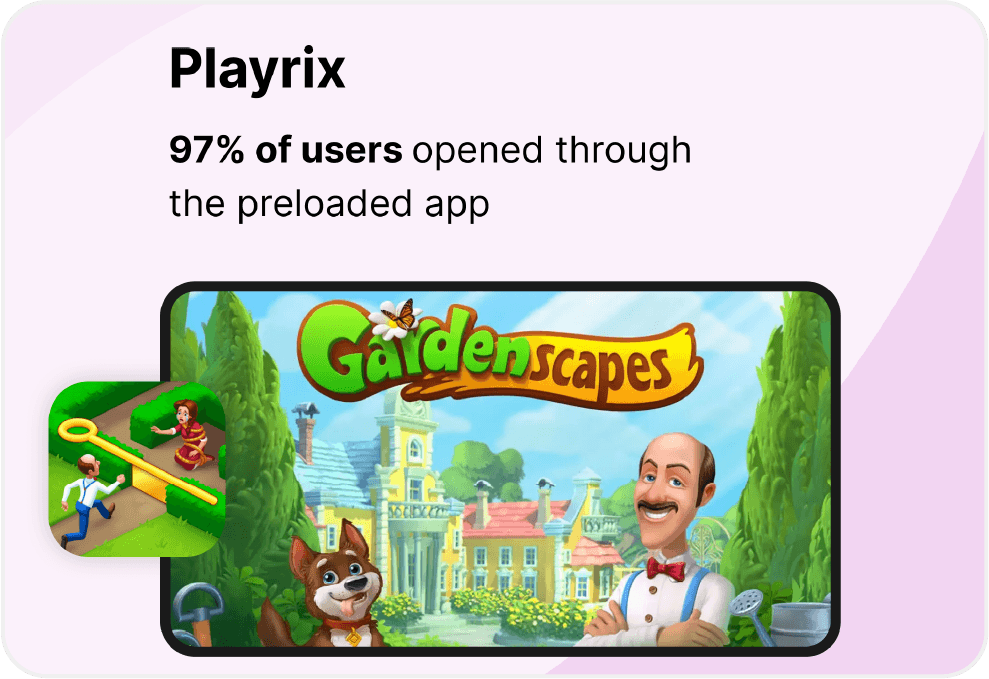
For Playrix, the additional path was highly incremental: 97% of users who opened a preloaded Playrix app would not have opened it had the app not already been installed on their device through our on-device offering.
Engaging Users After the Install
Getting onto the phone is hard. Staying visible and relevant once you’re there can be just as challenging, but even more rewarding.
DT can bring an installed app back into view directly on the device, through notifications, app recommendations, and other discovery surfaces throughout the life of the device. And when users are spending time elsewhere, DT’s global footprint creates another way to reach them across entertainment, shopping, finance, lifestyle, utilities, gaming, and more.
Together, these touchpoints give marketers more opportunities to bring users back—whether directly from the device or while they’re engaged elsewhere.
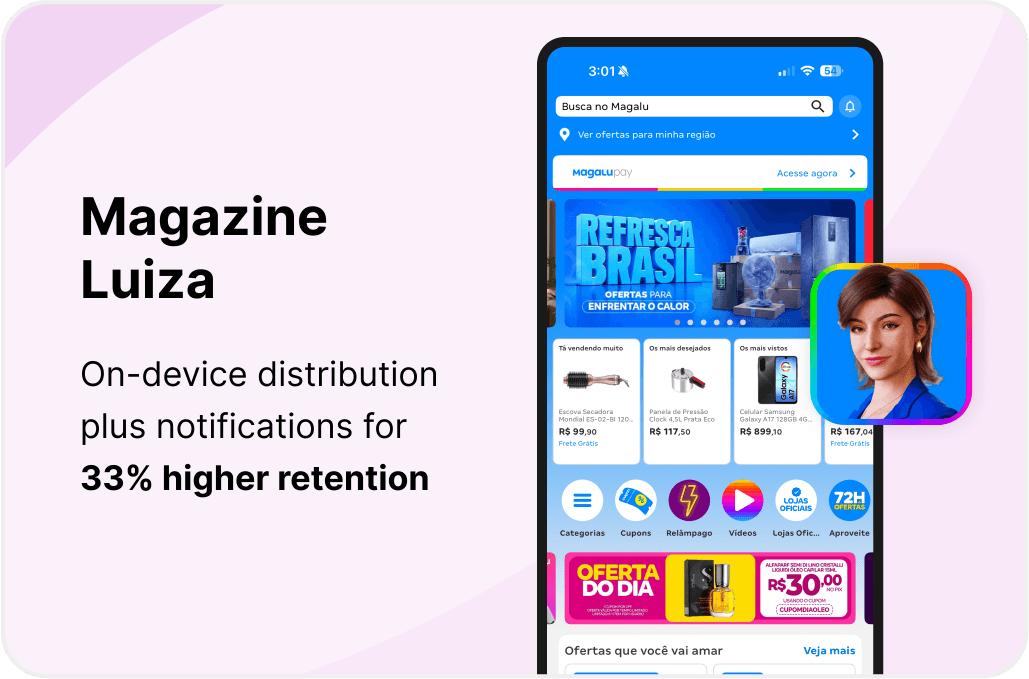
Magazine Luiza put this approach into practice, pairing on-device distribution with notifications to reengage users after the install. The strategy drove 33% higher 90-day retention.
Measure On-Device Differently
On-device discovery doesn’t behave like a traditional in-app ad. Instead of seeing and clicking an ad, a user may discover an app because it’s already on the device or surfaced directly through the device experience.
This changes how marketers should think about measurement. Attribution settings and lookback windows need to account for how users encounter and engage with the app. Measurement should extend beyond the initial install to downstream outcomes such as engagement, retention, purchases, and LTV.
That’s where a configurable measurement partner like Kochava can play an important role, helping marketers evaluate on-device strategies alongside the rest of their acquisition mix.
Putting It Into Practice
Connect acquisition and reengagement.
Getting the install is only the first step. Use on-device distribution to reach new users, then pair it with retargeting, not just on device but in app as well. This brings users back and encourages continued engagement. Leveraging both together can help marketers influence the user journey more holistically and better understand how acquisition and reengagement work together to drive longer-term performance.
Design for the context.
Consider where and how a user will encounter your message, and tailor the creative experience accordingly. What works directly on the device may not work within an app—the format, message, and call to action should make sense for the environment.
Measure for how the channel works.
On-device acquisition doesn’t always follow the same path as a traditional ad campaign. Kochava’s configurable attribution settings can help marketers account for those differences and evaluate performance beyond the initial install—including downstream engagement, retention, and value.
Get Started
DT helps app marketers reach new users and keep them engaged through direct on-device distribution and broad in-app reach.
To learn more about working with DT, contact us.
For help configuring your DT campaign in Kochava, contact your Client Success Manager or email support@kochava.com.
About the Author

Taylor Morris is Head of Technical Partnerships at DT, where he leads measurement, data, and identity partnerships across DT’s on-device and in-app ecosystem. His focus is on building partner integrations that translate DT’s reach into measurable growth for marketers.