Understanding how upper-funnel media creates demand that lower-funnel channels capture
TL;DR Summary (click to expand)
Search and social often receive credit for conversions, but they frequently just capture demand upstream media helps create. In Kochava Foundry analysis, when both CTV and search appeared in the same conversion journey, CTV came first 96% of the time. When both CTV and paid social appeared in the same journey, CTV came first 94% of the time. That is a strong signal that CTV, and often out-of-home, are influencing the actions that later show up as lower-funnel performance.
For marketers, the takeaway is not to pull back on search and social. It is to understand them in context and plan them as part of a connected strategy. Brands that manage upper-funnel and lower-funnel channels in isolation risk misreading performance, undervaluing CTV and OOH, and making media mix decisions without a full view of cross-channel synergy, timing, and cause and effect. Grant Simmons unpacks the insights here.
What if the channels getting credit for most of your lower-funnel conversions are not the channels actually creating the catalysts for those conversions to happen?
This question sits at the center of a lot of the work my team and I do. At Kochava Foundry, we have spent years measuring how channels like connected TV (CTV) and out-of-home (OOH) drive real business outcomes at the top (e.g., brand lift, awareness) and bottom (e.g., app installs, registrations, purchases, ticket sales, footfall visitation) of the funnel. What is increasingly interesting, and more strategically important, is what happens between the moment someone sees an ad on a TV screen or billboard and the moment a conversion finally shows up in a dashboard.
Watch my related AdTech Trends video:
Demand Capture vs. Demand Creation
When marketers open an attribution report, they often see search and social dominating. Google, Meta, TikTok, and similar platforms appear to be doing the heavy lifting because they are often the last touch before a conversion. They are the click, tap, or interaction that gets counted. On the surface, it seems straightforward.
The problem is that last-touch reporting can make demand capture look like demand creation.
What I see in deeper analysis is often a very different sequence. Search and social may be closing the loop, but in many cases the momentum starts earlier, with media that influences the consumer off-device and upstream.
The Cross-Channel Pattern Marketers Need to Know
One of the clearest examples of this pattern comes from CTV. When we looked at conversion journeys where both CTV and search were present, CTV appeared first 96% of the time. This is not a marginal relationship, but a strong directional pattern. We saw nearly the same thing with paid social. In conversion journeys where both CTV and paid social were present, CTV appeared first 94% of the time.
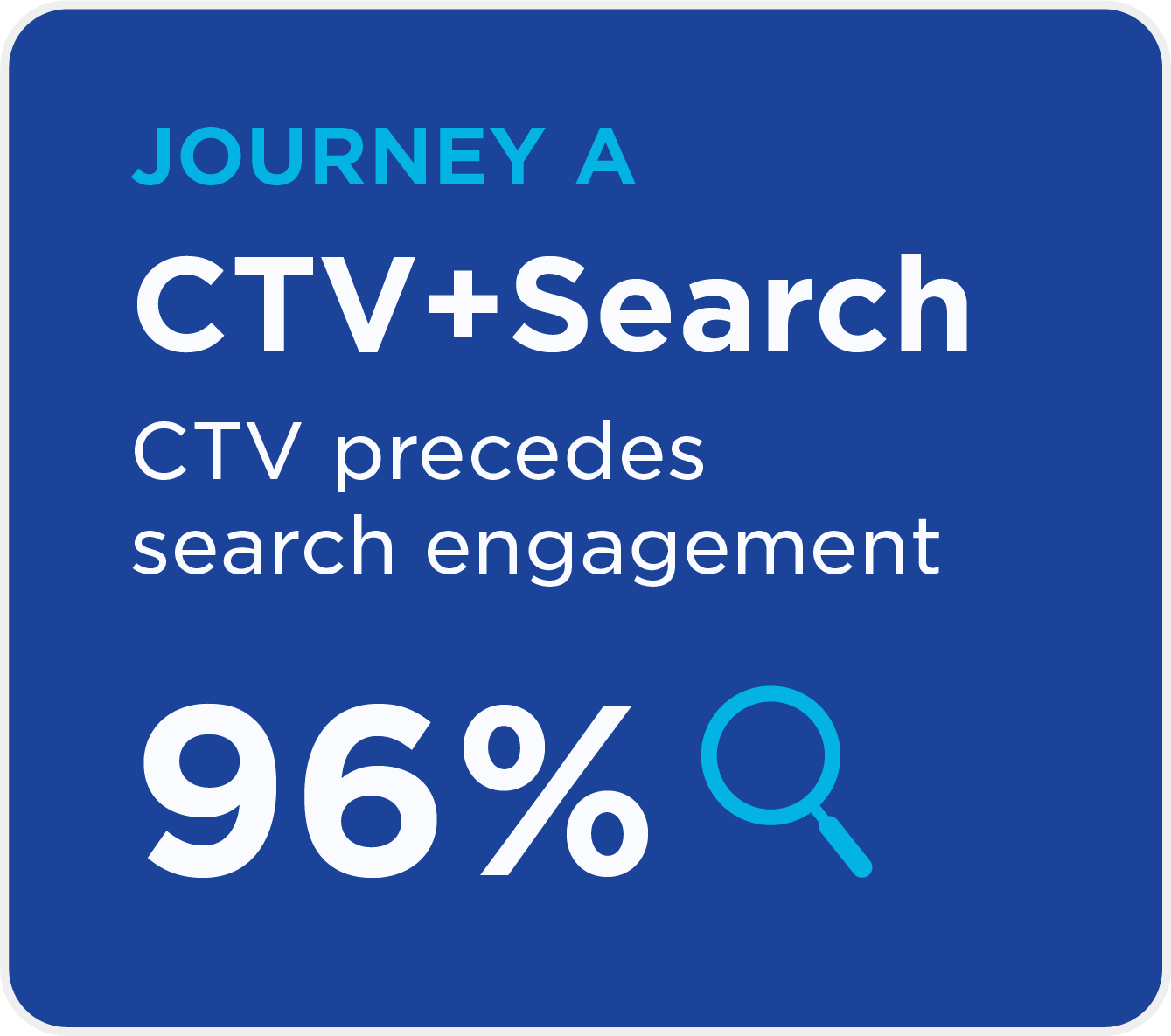
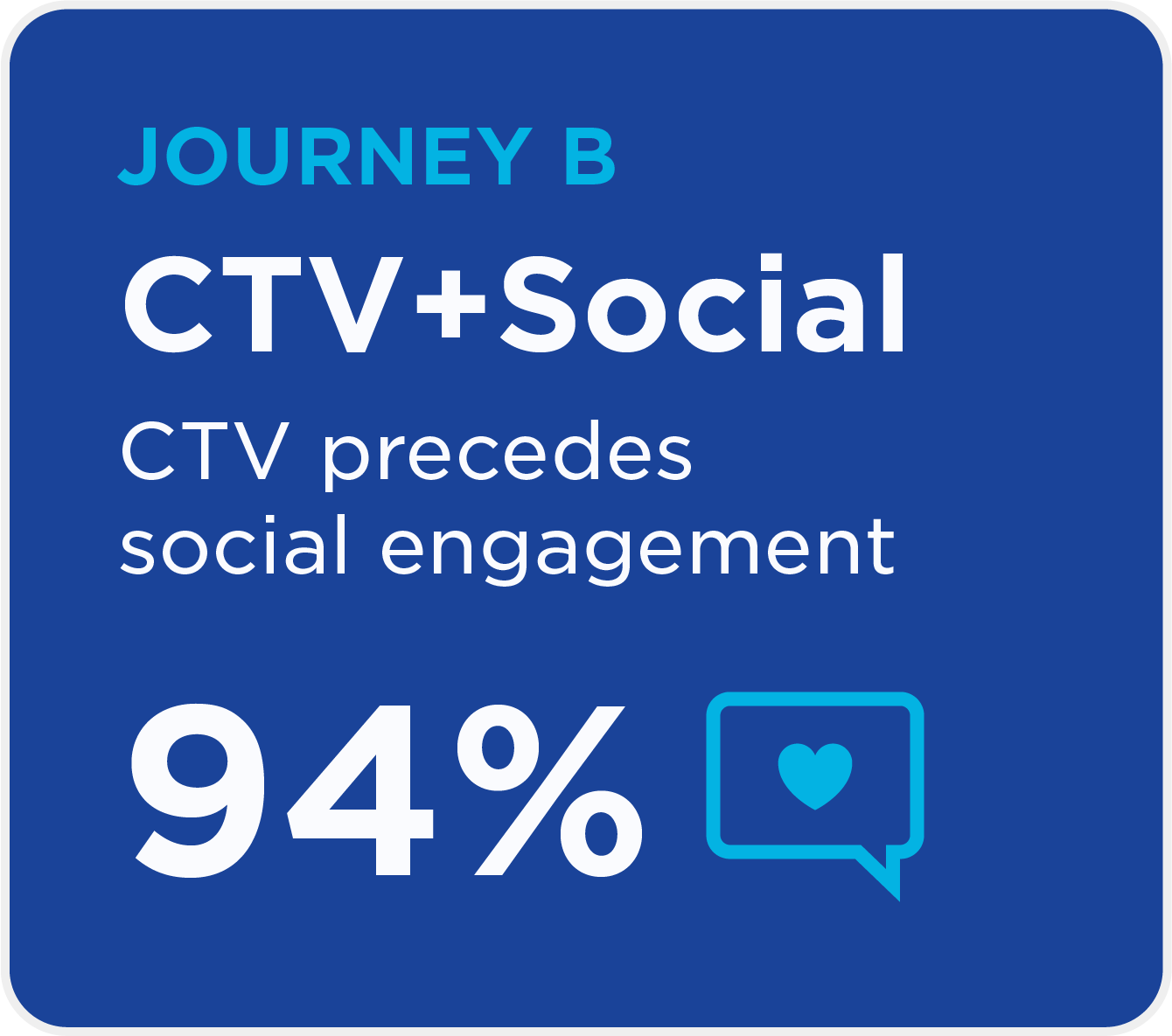
Those numbers matter because they tell us something fundamental about how media is working. In many journeys, CTV is not just building awareness in some abstract brand sense. It is actively driving the behavior that later shows up as search interest, social engagement, and ultimately, conversion activity. Someone sees an ad in their living room, picks up their phone later, searches for the brand, clicks a paid search result, engages with a social placement, and converts. The conversion is real. The lower-funnel platform does play a role. But it did not act alone. We observe that out-of-home often behaves the same way.
This is one of the most important lessons marketers should keep in mind as channel convergence accelerates. Consumers do not move through channels in neat, isolated steps. They constantly flow between physical and digital environments. They see a billboard on the way to work. They stream content at home in the evening. They search from a mobile device. They click into social. They buy in app, online, or in store. From a consumer standpoint, this is one connected journey. From a measurement standpoint, it is often fragmented into separate systems, each claiming their own piece of the outcome.
This is where strategic mistakes happen. If you evaluate performance only through the lens of the last credited touchpoint, you can end up systematically undervaluing the channels that initiated attention and intent. At the same time, you can overvalue the channels intercepting demand after it has already been created. Your reporting problem can manifest into a budget allocation problem.
I have seen this across verticals including QSR, retail, fintech, and entertainment. The pattern is remarkably consistent: Search and social appear dominant in mobile conversion reports, but when you layer in cross-device and cross-channel exposure analysis, it becomes much easier to see that upstream media frequently set the conversion pathway in motion.
This does not mean marketers should stop investing in search and social. In fact, the opposite is true. Those channels are essential. The point is that they should be understood in context.
Search and social are often highly effective demand capture channels. They also increasingly act as outcome environments for awareness and consideration created somewhere else. If you treat them as self-contained performance engines without accounting for upstream influence, you risk making two costly mistakes. First, you may cut or underfund the very channels generating intent in the first place. Second, you may keep pushing more money into lower-funnel environments that look efficient only because they are harvesting demand your broader media mix or existing brand equity has already created.

Rethinking Media Mix Strategy
This is why I think marketers need to move beyond rigid channel labels such as upper funnel and lower funnel, at least in the way they are often used in planning conversations. CTV and OOH are still absolutely powerful awareness channels. But in practice, they can also drive measurable mid- and lower-funnel outcomes by pushing consumers toward search and social behaviors that lead directly to conversion. Likewise, search and social are not just lower-funnel tools. They are frequently part of a broader sequence that starts with upstream exposure and ends with downstream action.
The brands getting smarter about media investment are asking not only “Which channel got the conversion?” They are also asking “Which channels created the conditions for that conversion to happen?” This is a much better strategic question because it gets closer to cause and effect.
Cross-device, cross-platform, and cross-channel measurement is essential here. Without it, marketers are left reading partial stories, then making full-budget decisions from incomplete evidence. When I say that attribution should be about more than credit, this is exactly what I mean. The goal is not just to assign a winner at the end of a customer journey; it’s to understand which channels are influencing action, in what sequence, and with what downstream effect.
This understanding should shape media mix decisions across the complete funnel.
This should change how teams work together. If one team is managing lower-funnel channels like search and social while another is managing brand, CTV, or OOH, it’s highly likely both are missing how the channels influence one another. I think this is where a lot of opportunity gets lost.
Eliminate Siloed Channel Planning
If your analysis shows that CTV or OOH consistently precede the search and social actions that convert, then those channels should not be judged only by traditional upper-funnel KPIs. They should also be valued for their ability to produce performance outcomes indirectly but measurably. That does not eliminate the need for efficiency discipline. It just means you need a fuller definition of efficiency.
Just as important, this should change how teams work together. If one team is managing lower-funnel channels like search and social while another is managing brand, CTV, or OOH, it’s highly likely both are missing how the channels influence one another. I think this is where a lot of opportunity gets lost. The more disconnected your planning conversations are, the easier it becomes to misread performance. At a minimum, brands should be creating coordination points across the teams managing media at different stages of the funnel. This does not always mean budgets need to move immediately. It does mean the teams should be sharing context, timing, and expectations so they can understand the cross-channel and cross-funnel synergies at work—and plan with a more complete view of performance.
What I’ve found is that marketers get better outcomes when they plan the channels as coordinated systems. If you know a heavy CTV flight or major digital out-of-home push is going live, this should shape how you think about lower-funnel support. It may be the right moment to increase investment in search and social to capture the demand you expect your upstream media to create. It may also be the right moment to lean harder into brand defense so that if consumers move directly into the App Store or branded search environments, you are not giving competitors a chance to intercept that demand at the last mile.
The mix may shift. You may choose to focus more heavily on generic and category keywords when branded demand is not actively amplified by upstream media. The point is not that there is one fixed playbook. The point is that once you understand the correlation, you can manage the omnichannel mix much more intentionally. This is a far more productive way to think about search, social, CTV, and OOH than treating each one as an isolated line item with its own separate success story.
Strategic Takeaways
In my experience, brands navigating all this well do three things:
- They measure beyond the last click.
- They plan channels as connected systems rather than isolated line items.
- They treat channel interaction as a strategic advantage, not noise in the data.
This is increasingly the difference between optimizing for reported performance and optimizing for actual performance.
As convergence between media environments continues, marketers need to get more comfortable with the idea that the channel receiving credit may not be the channel creating momentum. Once you see this clearly, it changes how you think about budget allocation, creative sequencing, testing, and performance strategy.
If your team is trying to better understand how CTV, OOH, search, and social are working together, get in touch.
About the Author

Grant Simmons is VP of Kochava Foundry, the strategic services and client analytics division of Kochava. He works with leading brands on measurement strategy, attribution analysis, media effectiveness, and cross-channel performance, with a focus on helping marketers understand the relationships standard reporting often misses.